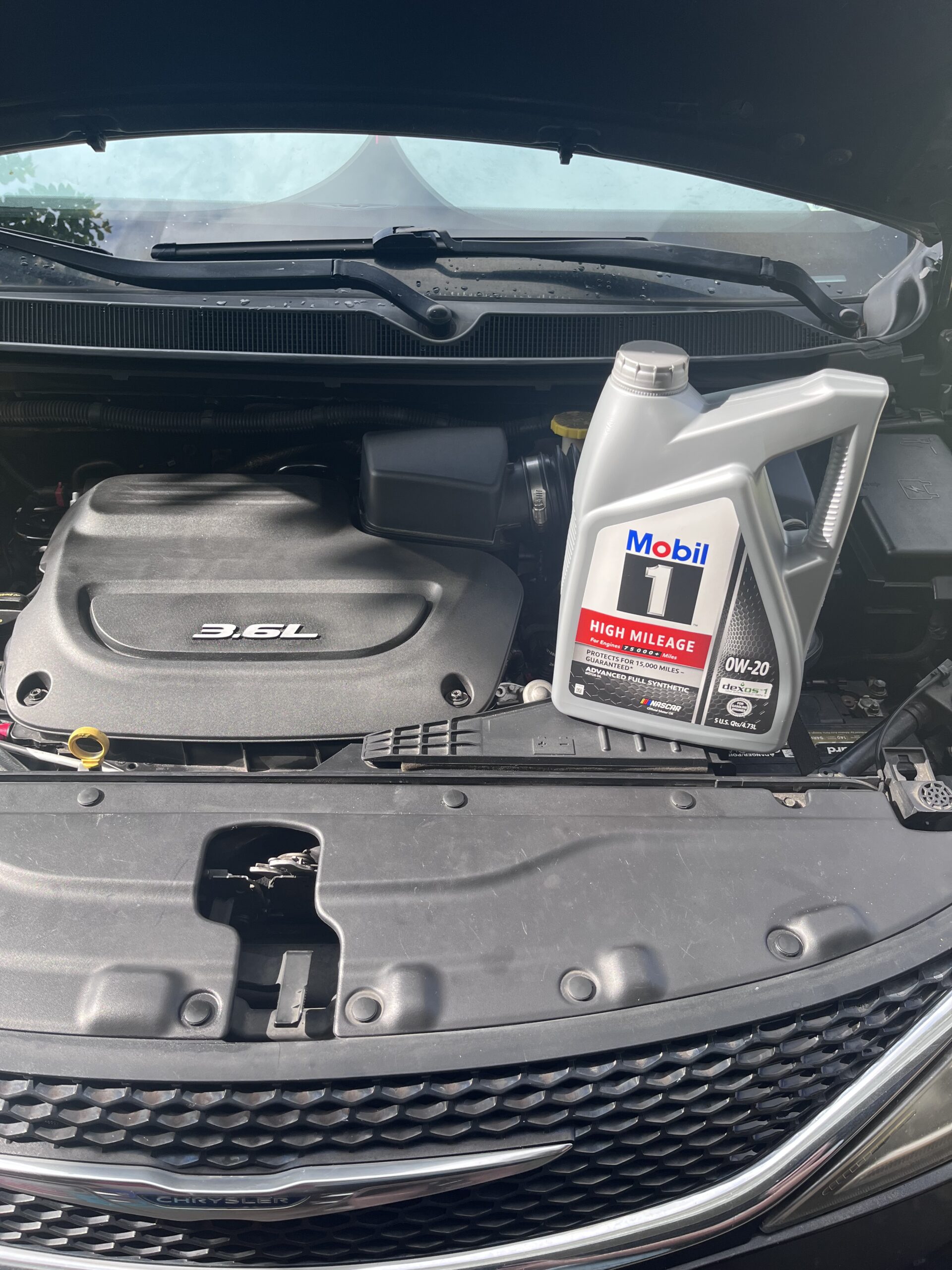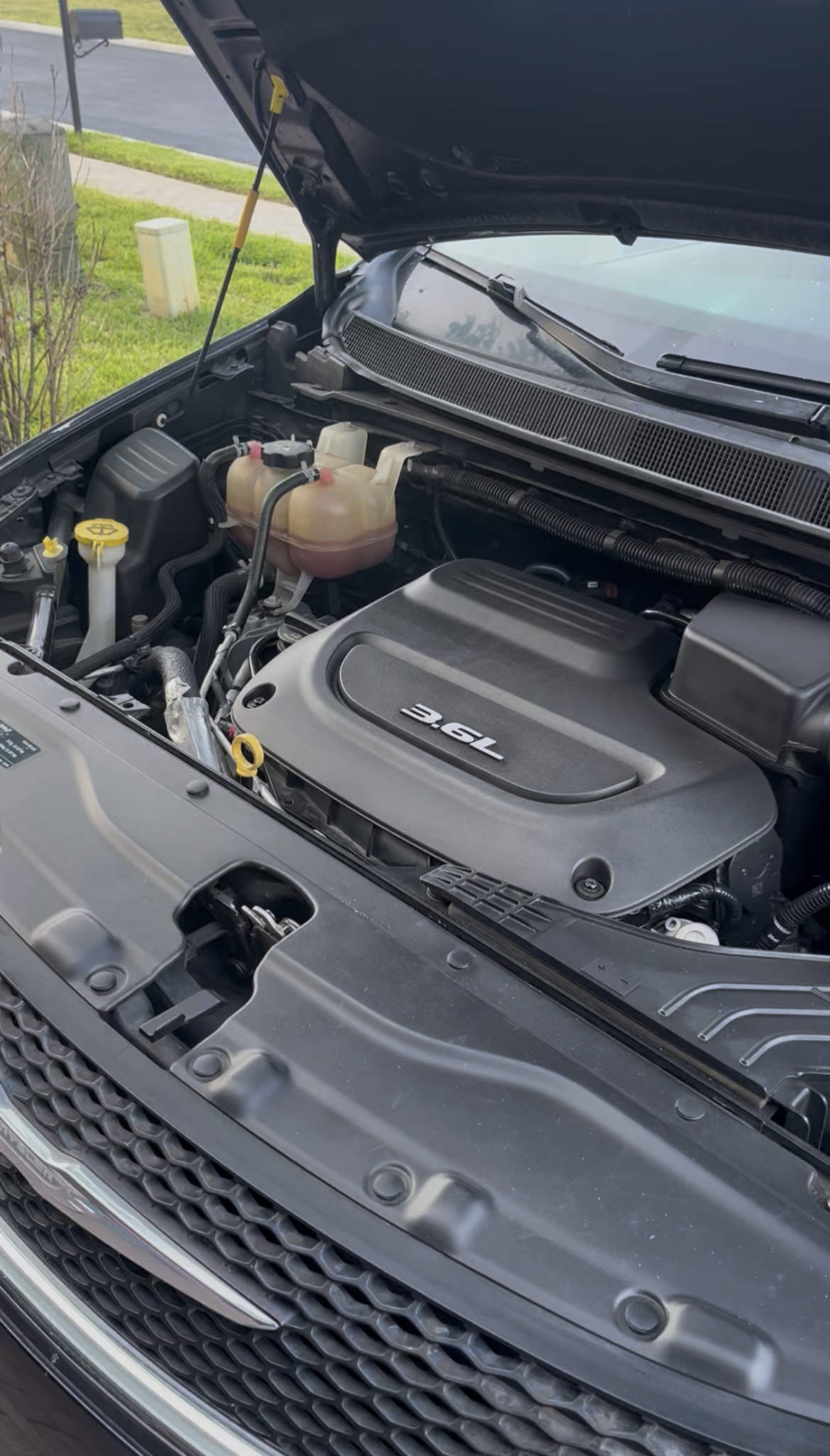
If your 3.6 Pentastar is throwing a cylinder misfire code and the dealer is quoting you thousands of dollars, read this first. I spent a month chasing a P0304 code on my 2017 Chrysler Pacifica — replacing spark plugs, ignition coils, fuel injectors, VVT solenoids, VVL solenoids, and an intake manifold — before finding the real answer. I fixed my Pentastar misfire and in only cost me $30 and two hours of work.
What Vehicles Does This Apply To?
The 3.6L Pentastar V6 is one of the most widely used engines in Chrysler’s lineup. If you own any of these vehicles and have a cylinder misfire, this post is for you:
- Chrysler Pacifica (2017–present)
- Jeep Grand Cherokee
- Jeep Wrangler
- Jeep Gladiator
- Dodge Durango
- Dodge Challenger
- Dodge Charger
- Ram 1500
- Ram ProMaster
The Problem — What Was Happening
My 2017 Chrysler Pacifica started throwing a P0304 code — cylinder 4 misfire. The misfire had one very specific characteristic that turned out to be the key to the whole diagnosis: it only happened at idle below 1,000 RPM and completely disappeared above that.
At a stoplight — rough and misfiring. On the highway — smooth as glass. This detail matters more than anything else in this story.
Over the course of a month I replaced:
- Spark plugs
- Ignition coil on cylinder 4
- Fuel injectors (multiple times)
- Both VVT solenoids
- Both VVL solenoids
- Lower intake manifold
- EVAP purge solenoid
The misfire kept coming back. Every part replaced, same result.
The Diagnosis That Changed Everything
I hooked up an OBD scanner and pulled live data. Two things stood out immediately.
First, the cam timing data was perfect. Both exhaust cams were tracking within 1-2 degrees of their desired positions — ruling out VVT, timing chain, and cam-related issues completely.
Second, the injector pulse width on cylinder 4 was consistently shorter than every other cylinder. The ECU was actively pulling fuel from cylinder 4 — compensating for something wrong specifically in that cylinder. The engine computer knew something was off even if I didn’t.
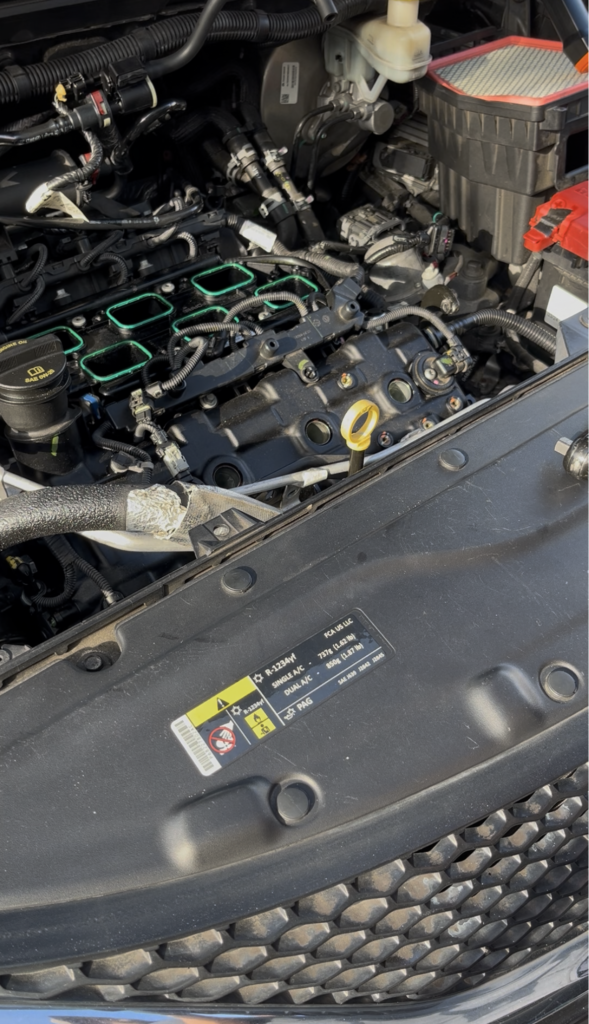
Then I did a compression test. Here’s where the real answer showed up:
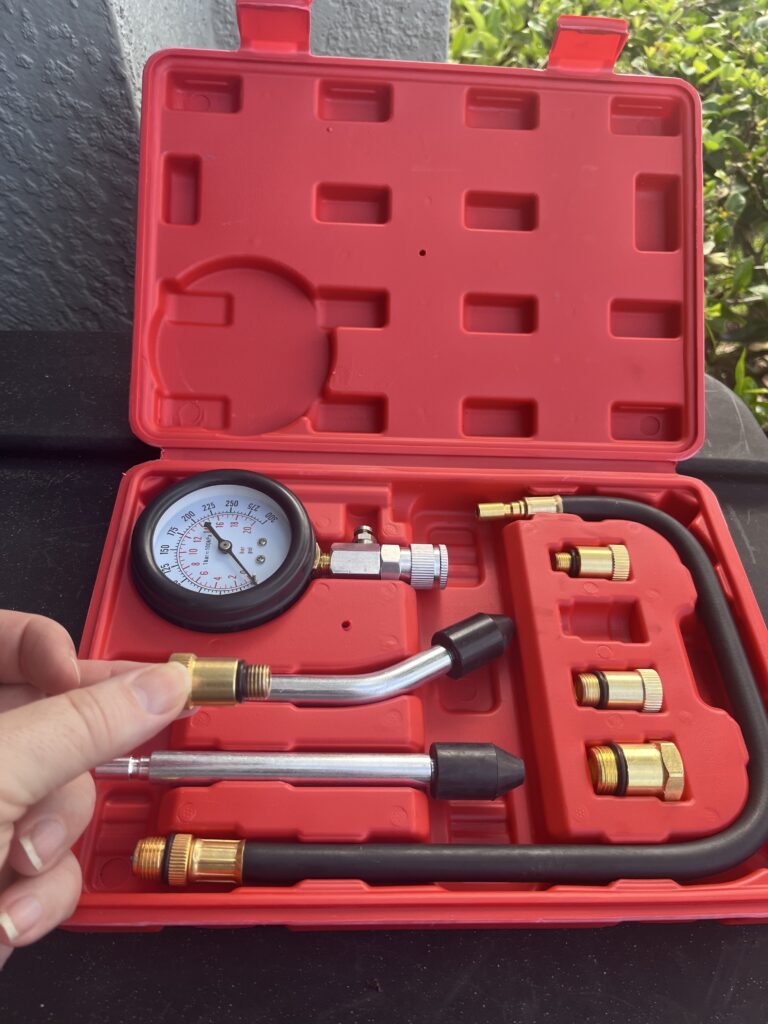
- Dry compression on cylinder 4: 150 PSI
- Wet compression on cylinder 4 (with oil added): 175 PSI
A 25 PSI jump between dry and wet compression is the textbook signature of carbon stuck piston rings. The rings weren’t worn — they were physically stuck in their grooves by carbon deposits and couldn’t seal the cylinder properly at the low combustion pressures of idle.
At higher RPM, combustion pressure was strong enough to force the rings outward and seal despite the carbon. At idle, it wasn’t — and the misfire happened every time.
What Actually Caused the Carbon Buildup
Here’s where it gets interesting for every Pentastar owner reading this.
When I pulled the front VVL (Variable Valve Lift) solenoid, I noticed the bottom O-ring was missing. It had been gone for an estimated 20,000 miles. The rear VVL solenoid was testing out of spec on continuity as well.
The VVL system controls switching between low and high valve lift profiles. At idle, the engine runs on the low lift cam profile. With both VVL solenoids either missing an O-ring or failing electrically, the valve lift system wasn’t operating correctly at idle for thousands of miles.
The result: incomplete combustion at idle, over and over, mile after mile. Every incomplete combustion event deposited a small amount of carbon on the piston crown and into the ring grooves. Over 20,000 miles that carbon accumulated until the rings on cylinder 4 — the hottest cylinder in the middle of the front bank — couldn’t move freely anymore.
The VVL solenoid failure also explains several other symptoms that had been present for months:
- An intermittent P000D code (exhaust cam slow response)
- A P0456 EVAP small leak code that kept coming back after repairs — the abnormal crankcase pressure from incomplete combustion was affecting intake vacuum and triggering false EVAP readings
- An oily EGR valve from excess blow-by
- Sooty spark plugs on cylinders 2, 4, and 6 — the entire front bank served by the failing VVL solenoids
One root cause. Multiple symptoms. Every repair I did addressed a symptom while the real problem kept running underneath.
The $30 Fix
Once I confirmed carbon stuck rings through the wet compression test, the repair plan was simple.
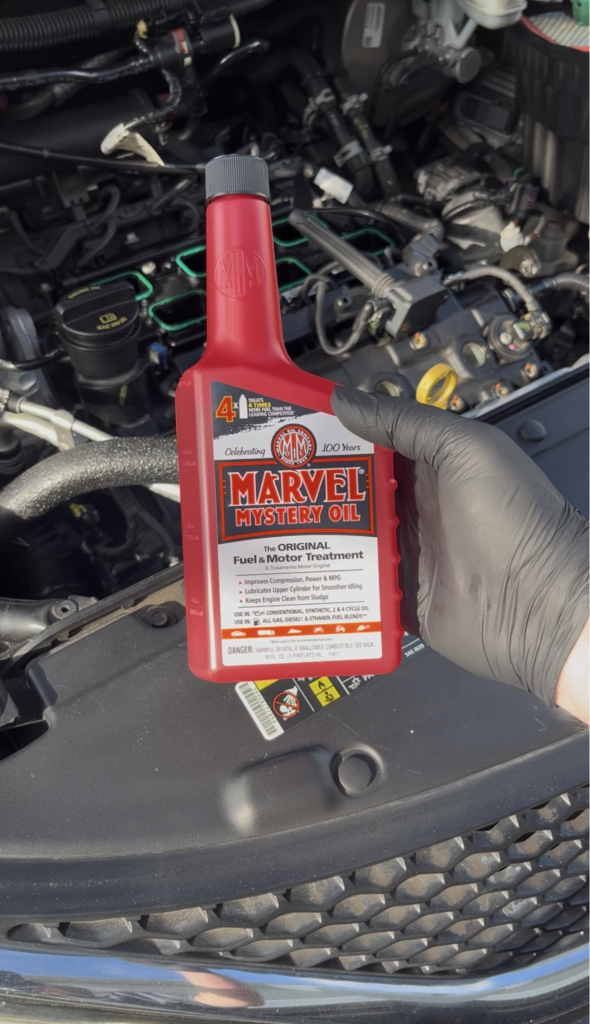
Step 1 — Marvel Mystery Oil Overnight Soak
I removed the cylinder 4 spark plug and used a small squeeze bottle to inject approximately 50ml (about 3 tablespoons) of Marvel Mystery Oil directly into the cylinder through the spark plug hole.
I reinstalled the spark plug loosely and let it soak overnight — a minimum of 8 hours, longer is better.
Marvel Mystery Oil penetrates into the ring grooves and softens the carbon deposits, allowing the rings to move freely again. The next morning I used a manual vacuum pump to remove as much of the oil as possible before starting the engine.
Step 2 — Seafoam Motor Treatment Induction Cleaning
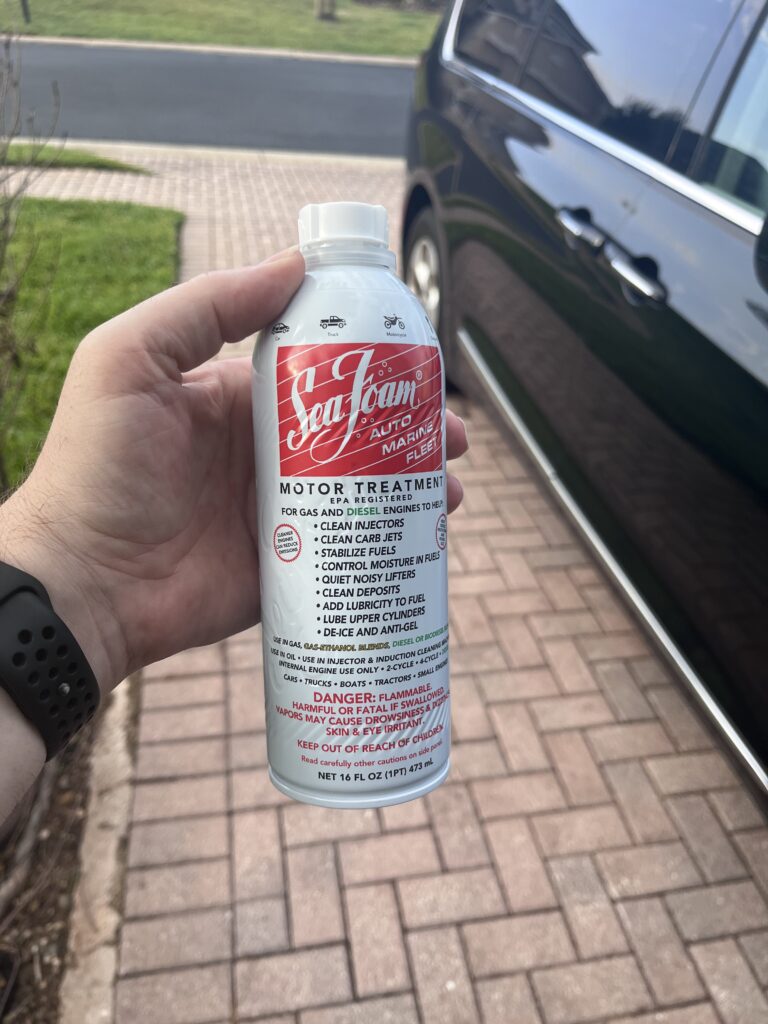
With the engine fully warmed up to operating temperature, I disconnected the EVAP purge solenoid hose at the intake manifold and submerged it in a tray of Seafoam SF16 Motor Treatment.
With the engine held at 2,000 RPM, the vacuum pulled the Seafoam through the intake system slowly over about 4-5 minutes — approximately half a can. Then I shut the engine off immediately and let it soak for 45 minutes.
Important: Use Seafoam Motor Treatment SF16 — white can with red letters. Not the High Mileage version, not Seafoam Spray. The original Motor Treatment formula is specifically designed for intake induction cleaning and is significantly more aggressive on carbon deposits.
After the soak, I restarted the engine and rev’d it firmly to 3,000-4,000 RPM several times to blow out the loosened carbon deposits. White/grey smoke from the exhaust is normal — that’s the carbon burning off.
Step 3 — Italian Tune Up
Immediately after the Seafoam treatment I took the van for a 45-minute highway drive, varying speeds and getting up to 4,000 RPM periodically. This burns off any remaining loosened deposits and gives the rings the heat cycles they need to reseat properly.
Step 4 — Fresh Oil Change
After the highway drive I did an immediate oil change with fresh Mobil 1 synthetic. The Seafoam and Marvel Mystery Oil loosen carbon deposits throughout the engine — those deposits end up in the oil. Changing the oil after treatment flushes all of that out. Don’t skip this step.
The Results
Within 5 minutes of the highway drive the misfire was gone. The idle smoothed out completely. When I reconnected the scanner, the injector pulse widths on all six cylinders had equalized — the ECU was no longer compensating for cylinder 4. The engine was running as it should.
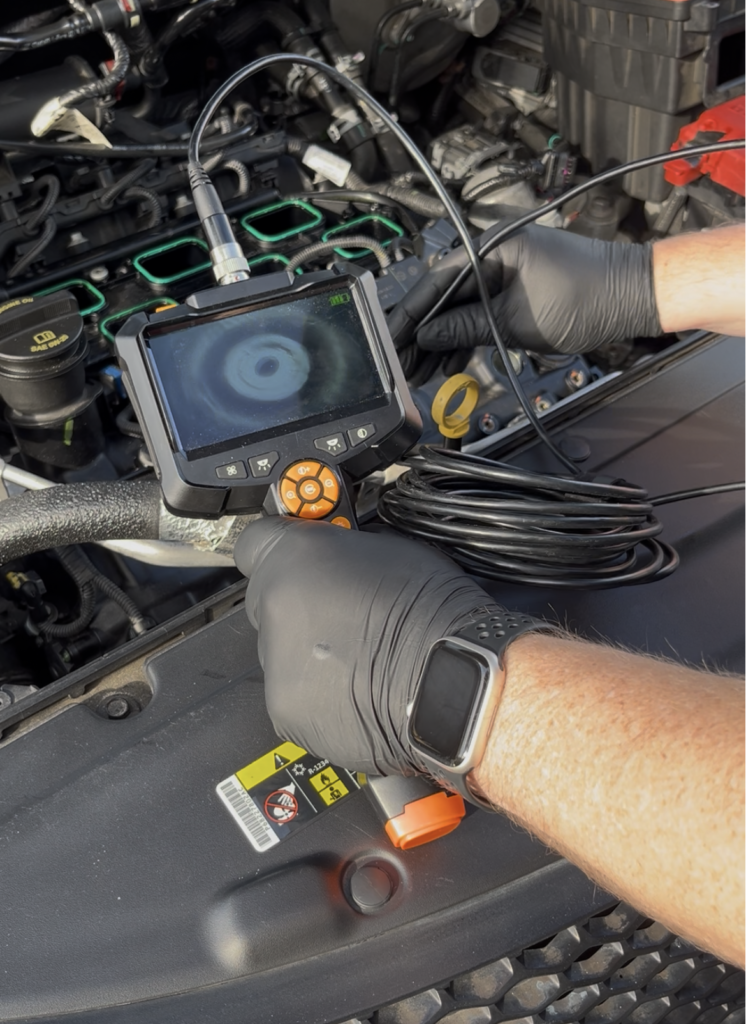
A follow-up borescope inspection showed the piston crown went from heavily coated with crusty yellow/brown carbon deposits to a clean smooth surface. The cylinder walls showed no scoring or damage. The rings were sealing correctly.
Tools That Made This Diagnosis Possible
You can’t fix what you can’t see. These are the tools I used throughout this diagnosis:
Essential for visually inspecting the piston crown and cylinder walls without disassembly. This is what showed me the carbon buildup and confirmed the cleaning worked. The 1080P HD resolution and 8 adjustable lights made it easy to see inside the cylinder clearly.
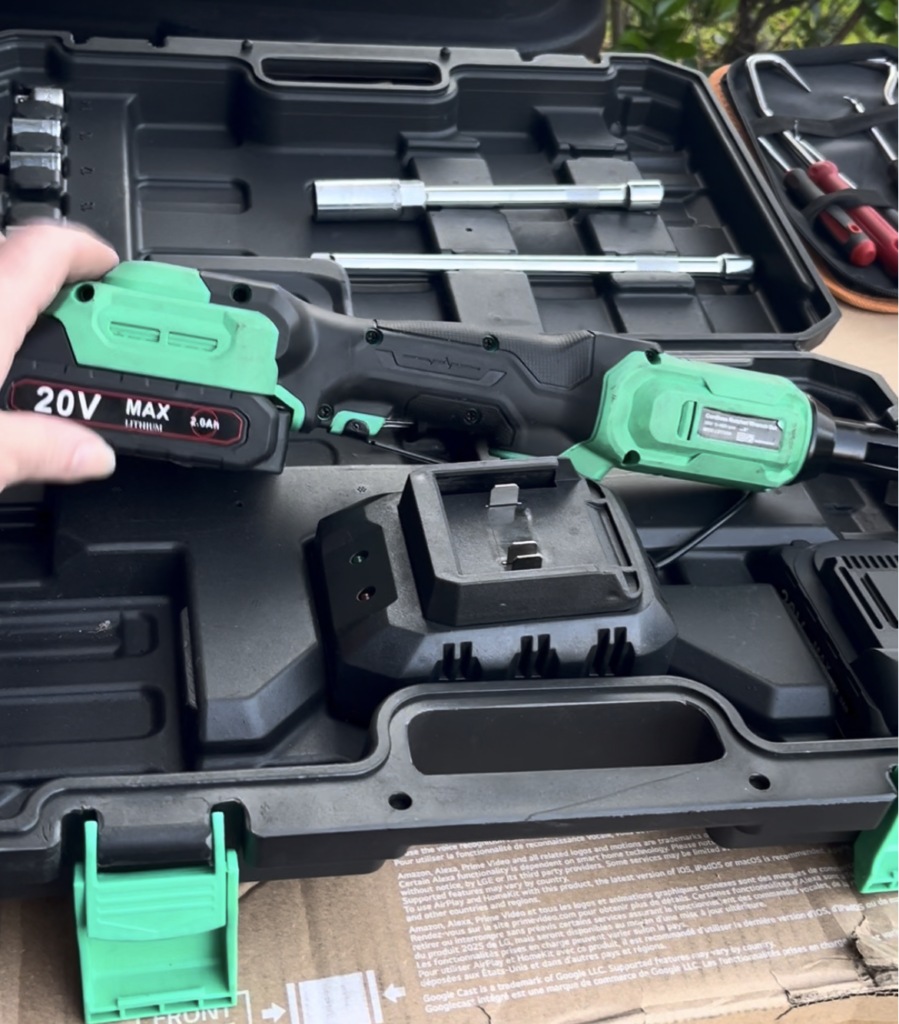
When you’re pulling an intake manifold multiple times in a week, a cordless power ratchet saves enormous time and hand fatigue. The 400 RPM speed and LED work light made working in tight spaces around the engine much easier.
Invaluable for removing O-rings, working with vacuum lines, and getting into tight spaces around the intake manifold and injector bores. The magnetic telescoping tool saved me multiple times when small parts dropped.
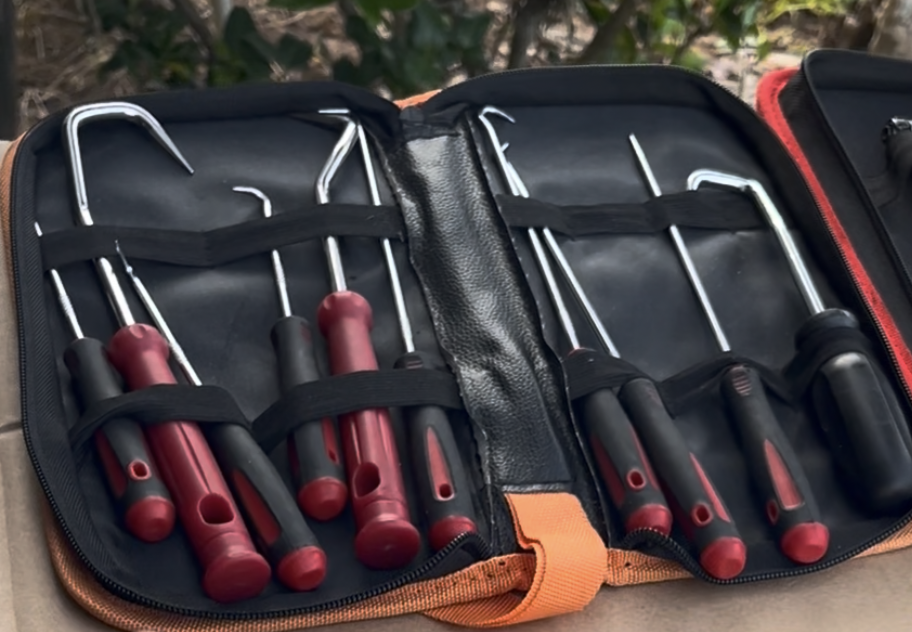
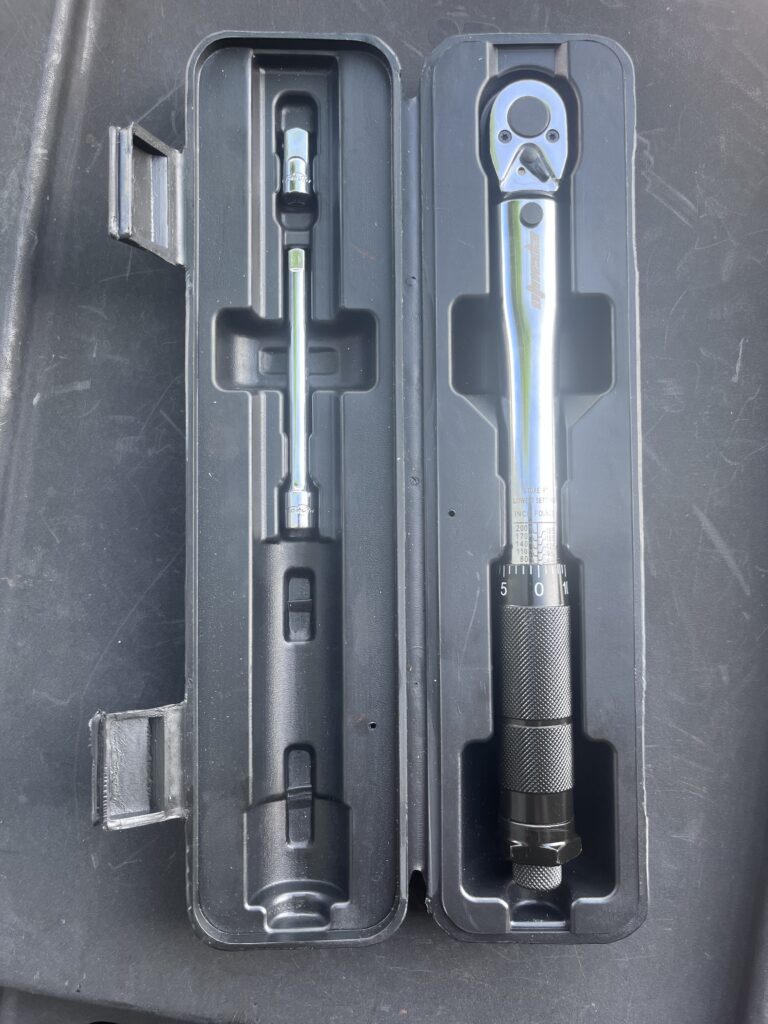
The 3.6 Pentastar intake manifold bolts torque to only 7-8 Nm — about 62-71 in-lb. This is critical. The manifold is plastic and overtorquing snaps bolts. A proper torque wrench in the right range prevents a simple repair from turning into a broken bolt extraction project.
Maintenance Going Forward
Now that the carbon is cleaned and both VVL solenoids are replaced correctly, here’s what I’m doing to prevent this from happening again:
- Add 1 oz of Marvel Mystery Oil per gallon of fuel as a regular fuel treatment — it keeps the upper cylinder area clean and lubricated, just not every fill up!
- Seafoam treatment every 15,000-20,000 miles as preventive maintenance
- Oil change after every Seafoam treatment to flush loosened deposits
- Proactively test VVL solenoid continuity at every oil change — takes 5 minutes with a multimeter and catches failing solenoids before they cause downstream carbon buildup
- Stick to Mobil 1 full synthetic and keep oil change intervals at 6,000 miles or less
Key Takeaways for Every Pentastar Owner
A misfire that disappears above 1,000 RPM almost always points to a compression or ring sealing issue — not ignition or fuel. If replacing plugs, coils, and injectors doesn’t fix it, stop buying parts and do a wet compression test.
The wet vs dry compression test is the definitive diagnostic — a 20+ PSI jump when oil is added to the cylinder confirms carbon stuck rings, not worn rings. These are completely different problems with completely different solutions.
VVL solenoids are a maintenance item the factory service schedule ignores. Both solenoids should be tested for proper continuity periodically. A failing VVL solenoid causes no obvious immediate symptoms but creates a cascade of downstream problems — incomplete combustion, carbon buildup, misfires, false EVAP codes, oily EGR — that look like unrelated issues.
The correct Seafoam product matters. Seafoam Motor Treatment SF16 is formulated for intake induction cleaning. The High Mileage version is a fuel and oil additive — effective for its intended purpose but not a substitute for the original formula when cleaning carbon deposits.
The 3.6 Pentastar is a good engine that responds well to proper maintenance. At 91,000 miles with consistent Mobil 1 synthetic oil changes, this engine has plenty of life left. Catching the VVL solenoid issue and cleaning the carbon buildup before it caused permanent ring wear made all the difference.
If your Pentastar is misfiring and the dealer is quoting you a new engine or a head job — get a compression tester, a can of Seafoam, and a bottle of Marvel Mystery Oil first.
The products mentioned in this post are linked to Amazon for your convenience. As an Amazon Associate I earn from qualifying purchases at no additional cost to you.