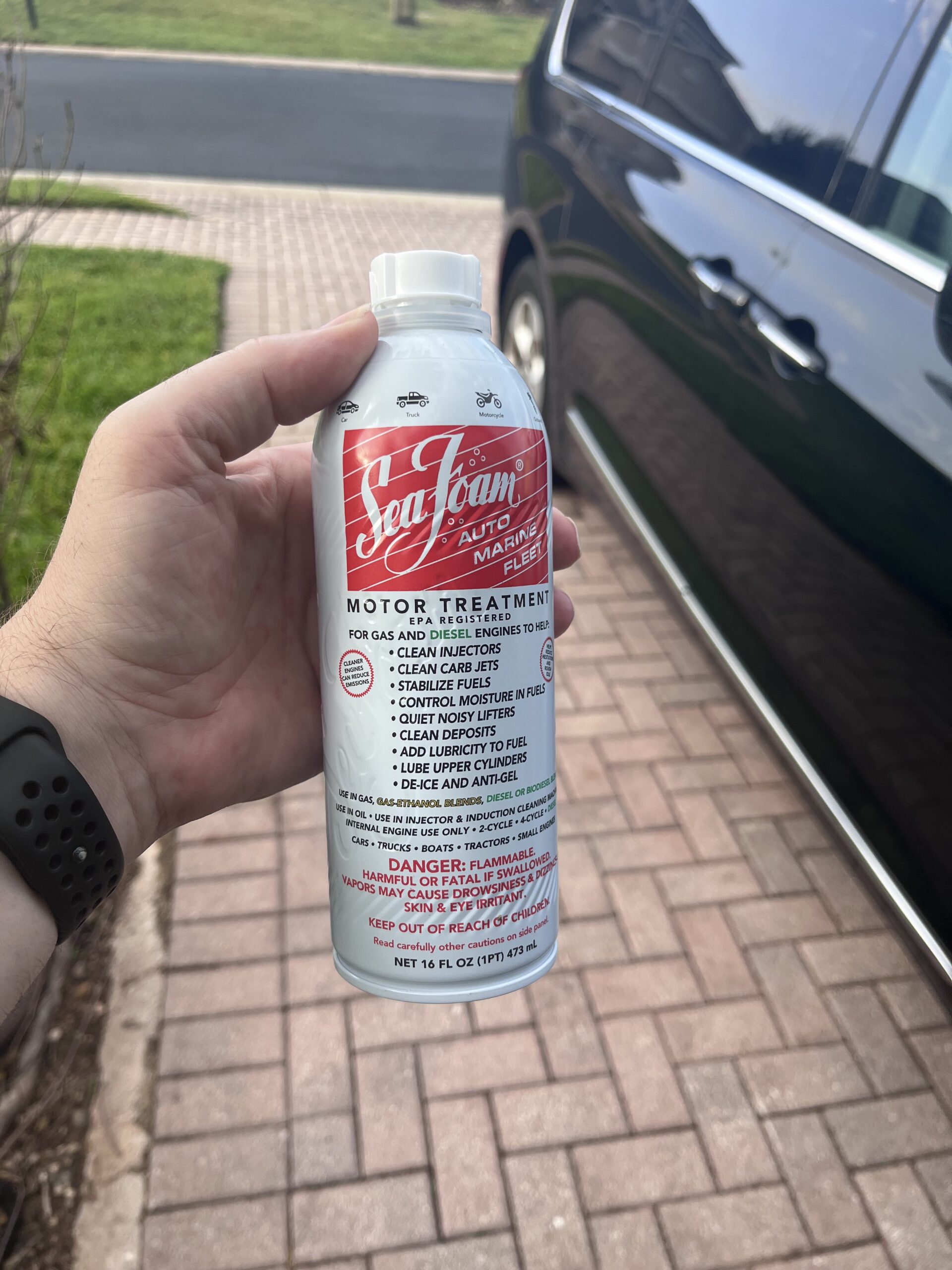
If you own a Chrysler, Dodge or Jeep vehicle with the 3.6 Pentastar engine Seafoam is one of the most talked about engine treatments in every FCA owner forum online. It has been used by mechanics and DIY owners for decades to clean engines, free stuck piston rings, and eliminate rough running and misfires. We used Seafoam engine treatment as part of a fix that solved a cylinder 4 misfire on a 2017 Chrysler Pacifica that mechanics were quoting $1,500 to $3,000 to repair. This is everything you need to know about Seafoam and how to use it correctly in your FCA vehicle.
What Is Seafoam
Seafoam Motor Treatment SF16 is a petroleum based engine cleaner and fuel system treatment made from 100 percent petroleum ingredients. It is safe for all gasoline engines and is designed to:
- Clean fuel injectors and fuel system components
- Liquefy and remove harmful engine deposits
- Free carbon stuck piston rings
- Stabilize fuel for storage
- Lubricate upper engine cylinders
- Remove moisture from fuel systems
- Free sticky lifters and quiet noisy engines
For 3.6 Pentastar owners dealing with cylinder misfires, rough idle, or carbon stuck piston rings Seafoam works directly on the root causes of these problems.
Why FCA and Pentastar Owners Use Seafoam
The 3.6 Pentastar is a multi-port fuel injection engine. Unlike direct injection engines it does not suffer from intake valve carbon buildup. However it is still prone to carbon deposits building up in the piston ring grooves over time — especially when incomplete combustion occurs due to issues like faulty VVL solenoids or missing O-rings. These carbon stuck rings cannot seal correctly at idle where combustion pressure is lowest causing persistent misfires that seem impossible to diagnose.
Seafoam drawn directly into the engine through the intake is one of the most effective treatments for freeing carbon stuck piston rings without disassembling the engine.
The Correct Seafoam to Use
This is important — use Seafoam Motor Treatment SF16. Do not use the High Mileage version. The SF16 formula is significantly more effective for the direct treatment method and makes a noticeable difference in results.
Three Ways to Use Seafoam in Your FCA Vehicle
Method 1 — Add to Fuel Tank This is the most common and easiest method for general maintenance and fuel system cleaning.
- Add one ounce of Seafoam per gallon of fuel
- For a 16 gallon tank add approximately 16 ounces — one full can
- Fill up your tank and drive normally
- Best results come from letting the tank run low before refilling so the Seafoam concentration stays high longer
- Do this every 3,000 to 5,000 miles as a maintenance treatment
Method 2 — Add to Engine Oil Adding Seafoam to your engine oil helps clean internal engine components including lifters, piston rings and oil passages.
- Add one third of a can to your engine oil
- Do this 100 to 300 miles before your next oil change
- Run the engine normally and let it work through the system
- Change your oil at the scheduled interval to flush out the dissolved deposits
- Never leave Seafoam in your oil beyond one oil change interval
Method 3 — Direct Intake Method This is the most aggressive and most effective method for freeing carbon stuck piston rings and is the method we used on our Chrysler Pacifica cylinder 4 misfire fix.
- Warm up the engine to full operating temperature
- Locate the EVAP purge hose going into the intake manifold
- With the engine running at approximately 2,000 RPM slowly draw half a can of Seafoam SF16 through the EVAP hose into the intake
- Do not rush this — take several minutes to draw it in slowly
- The engine will smoke heavily — this is completely normal
- Once half the can is in immediately shut the engine off
- Let it soak for a minimum of 45 minutes — do not skip this step
- Restart the engine and rev firmly to 3,000 to 4,000 RPM several times to blow out loosened deposits
- Follow immediately with a 45 minute highway drive varying RPM up to 4,000 — this is the Italian tune up phase
- Heavy white smoke from the exhaust during this process is completely normal
- Change your oil immediately after — use full synthetic like Mobil 1 with a new filter to flush all loosened carbon deposits
The Pacifica Cylinder 4 Misfire Fix
On our 2017 Chrysler Pacifica we dealt with a persistent P0304 cylinder 4 misfire that survived replacing spark plugs, ignition coils, fuel injectors, VVT and VVL solenoids, the lower intake manifold, and the EVAP system. Every mechanic we consulted wanted to replace cylinder heads or the entire engine.
The definitive diagnostic that cracked the case was a wet versus dry compression test. Dry compression on cylinder 4 read 150 PSI — slightly low but consistent with neighboring cylinders. Wet compression on cylinder 4 jumped to 175 PSI — a 25 PSI increase that is the definitive signature of carbon stuck piston rings not worn rings.
A borescope confirmed heavy carbon deposits on the piston crown. No oil consumption confirmed the rings were physically intact — just stuck with carbon.
The root cause was two faulty VVL solenoids — one with a missing bottom O-ring that had been causing incomplete combustion for approximately 20,000 miles. That incomplete combustion over time packed carbon into the cylinder 4 piston ring grooves. The rings could not seal at idle where combustion pressure is lowest which is why the misfire completely disappeared above 1,000 RPM.
The fix was Marvel Mystery Oil soaked overnight through the spark plug hole followed by the Seafoam direct intake method the next day. Total cost approximately $30. The complete step by step documented guide with diagnostic data is coming very soon to SmartVehicleHub.
Key Diagnostic Clue — Misfire That Disappears Above 1,000 RPM
If your Pentastar misfire disappears completely above 1,000 RPM this is one of the most important diagnostic clues you can have. It almost always points to a compression or ring sealing issue rather than an ignition or fuel problem. Do a wet versus dry compression test before agreeing to any major repair.
How Often Should You Use Seafoam in a Pentastar
For general maintenance and prevention:
- Add to fuel tank every 3,000 to 5,000 miles
- Add to engine oil 100 to 300 miles before each oil change
- Use direct intake method once a year or when you notice rough running or misfires
Where to Buy Seafoam
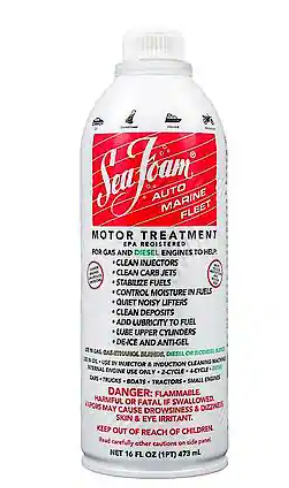
Always buy Seafoam Motor Treatment SF16 — not the High Mileage version. Available at AutoZone, Advance Auto Parts, Walmart, and Amazon.
Final Thoughts
Seafoam SF16 is one of the most effective engine treatments available for FCA Pentastar owners. Combined with Marvel Mystery Oil it forms the core of our Pacifica cylinder 4 misfire fix that saved thousands of dollars in unnecessary repairs. The complete documented diagnostic and fix guide is coming very soon — stay tuned to SmartVehicleHub.